

The Importance of Consistency in Injection Molding
Consistent quality in injection molding can become more difficult to maintain as production continues, particularly in high-volume manufacturing.
For manufacturers, this means quality needs to be checked throughout the production run. Parts must continue to meet the specified tolerances, while any changes in the molding process need to be identified and addressed promptly.
Key Indicators of Consistent Molding Quality
Four characteristics can help manufacturers assess quality consistency across repeated molding cycles:
- Part Weight: Consistent part weight can indicate stable material filling and packing. Changes may point to variations in the molding process.
- Dimensions: Part dimensions should remain within the specified tolerances to ensure components fit and function as intended.
- Appearance: Colour, gloss and surface finish should remain uniform. Flow marks and sink marks may indicate changes in material flow, packing or cooling.
- Repeatability: The process should produce similar results from cycle to cycle under comparable operating conditions.
Factors That Affect Quality Consistency
Machine Conditions and Process Parameters
Machine movements, pressure response and temperature control affect the molding cycle. Injection speed, injection pressure, holding pressure, holding time and cooling time also influence material filling, packing and part formation.
Mold Design and Condition
Gate and runner design affect material distribution, while venting allows air to escape during filling. Mold wear, contamination and uneven material flow between cavities may also affect part dimensions and appearance.
Material Properties and Preparation
Material flow behaviour, viscosity and shrinkage vary between plastic grades. Some materials also require drying before processing. Changes in material grade, batch or preparation conditions may affect molding results.
Cooling Conditions
Mold temperature and cooling water conditions affect how heat is removed from the part. Uneven cooling may cause differences in shrinkage, dimensional variations or warpage.
Since these factors can interact, identifying the cause of a variation may require checking several aspects of the molding process.
Practices for Maintaining Consistent Quality
Control and Record Process Settings
Set injection speed, pressure, holding time and cooling time according to the material, mold and product requirements. Record confirmed settings so production teams can compare them with subsequent runs and investigate changes.
Monitor Product Quality During Production
Check part weight, dimensions and appearance at suitable intervals rather than relying only on initial samples. Comparing inspection results over time helps identify variations and determine whether adjustments are needed.
Maintain Equipment and Manage Materials
Inspect machines and molds regularly for wear, contamination or damage. Follow material suppliers’ recommendations for storage, drying and processing, and keep records of material grades and batches to help trace differences between production runs.
When variations occur, production teams can compare machine data, process settings and part measurements before making adjustments. The resulting parts should then be checked again against the required specifications.
The Role of AI in Maintaining Process Consistency
Process settings established before production may need further adjustments as conditions change during a production run. Chen Hsong’s iChen™ AI Molder supports this through AI-assisted parameter tuning before mass production and real-time monitoring and adjustments during production.

AI-Assisted Parameter Tuning
Before mass production begins, finding suitable process parameters may involve repeated trial runs and adjustments. iChen™ AI Molder supports this process through an AI-guided trial cycle.
Operators configure the base product parameters and launch an AI-guided trial cycle. If a defect is identified, they can diagnose it, select the corresponding defect type and confirm the optimised parameters. This helps establish suitable process settings before mass production begins.
Real-Time Monitoring and Process Adjustments
Once mass production starts, actual process parameters may deviate from the established settings. iChen™ AI Molder monitors machine data in real time and compares actual process parameters with their theoretical values.
When deviations are detected, the system automatically makes micro-adjustments to relevant parameters, including injection and holding pressure.
For example, if the real-time injection pressure curve deviates from the standard curve, the system adjusts holding pressure to compensate for the discrepancy. It also adjusts the V-P switch position to correct deviations in shot volume.
A production example further illustrates this approach. In a sanitary ware component application using a Chen Hsong SM150-EH machine and PP material, the recorded data showed lower process variation with Stabmolding enabled. The standard deviation (SD) of part weight decreased from 0.032g to 0.021g, while cushion SD decreased from 0.057mm to 0.038mm, indicating more consistent results across production shots.
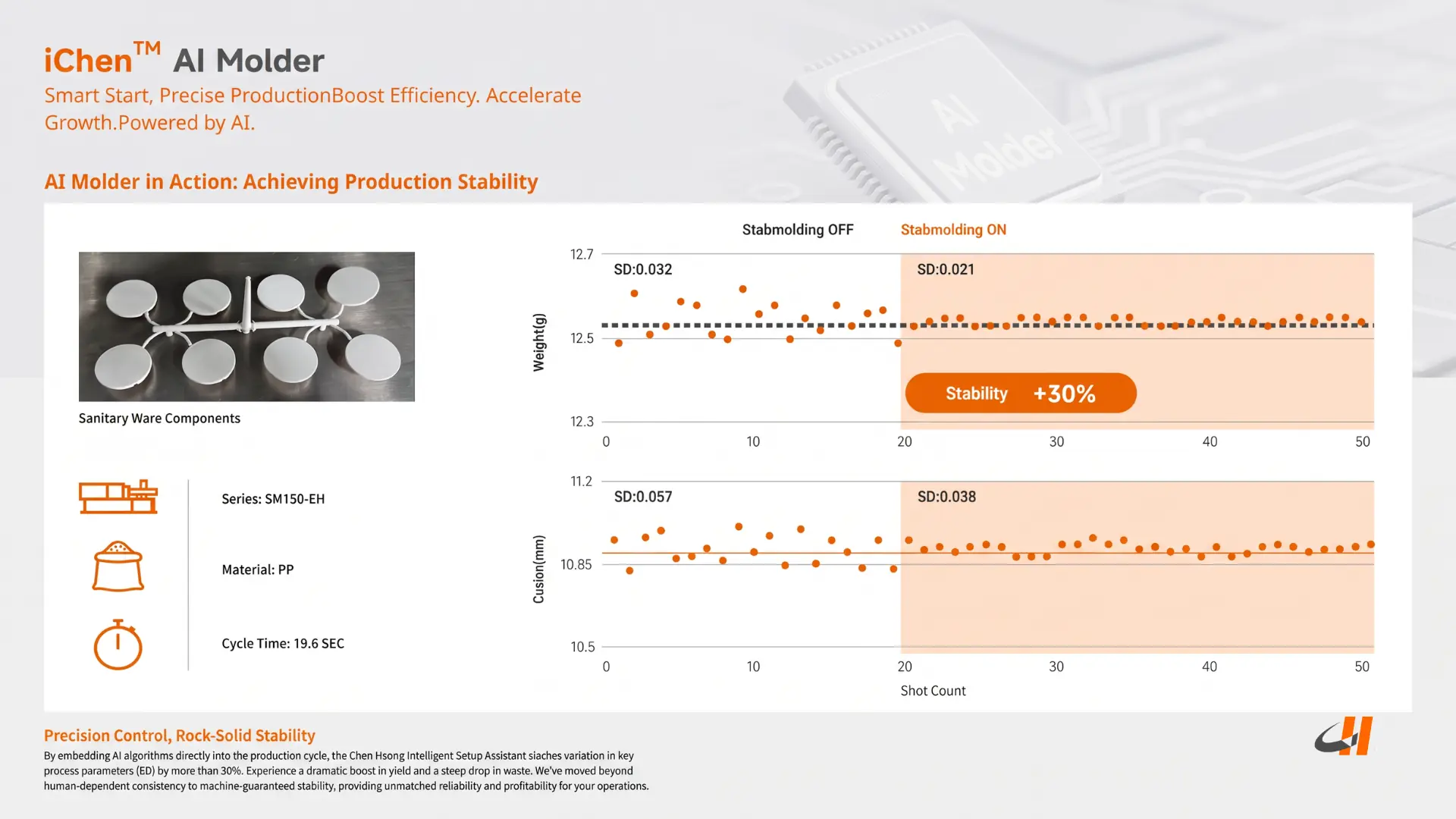
By supporting parameter setup before production and responding to process deviations during production, iChen™ AI Molder helps maintain more consistent molding conditions throughout mass production.
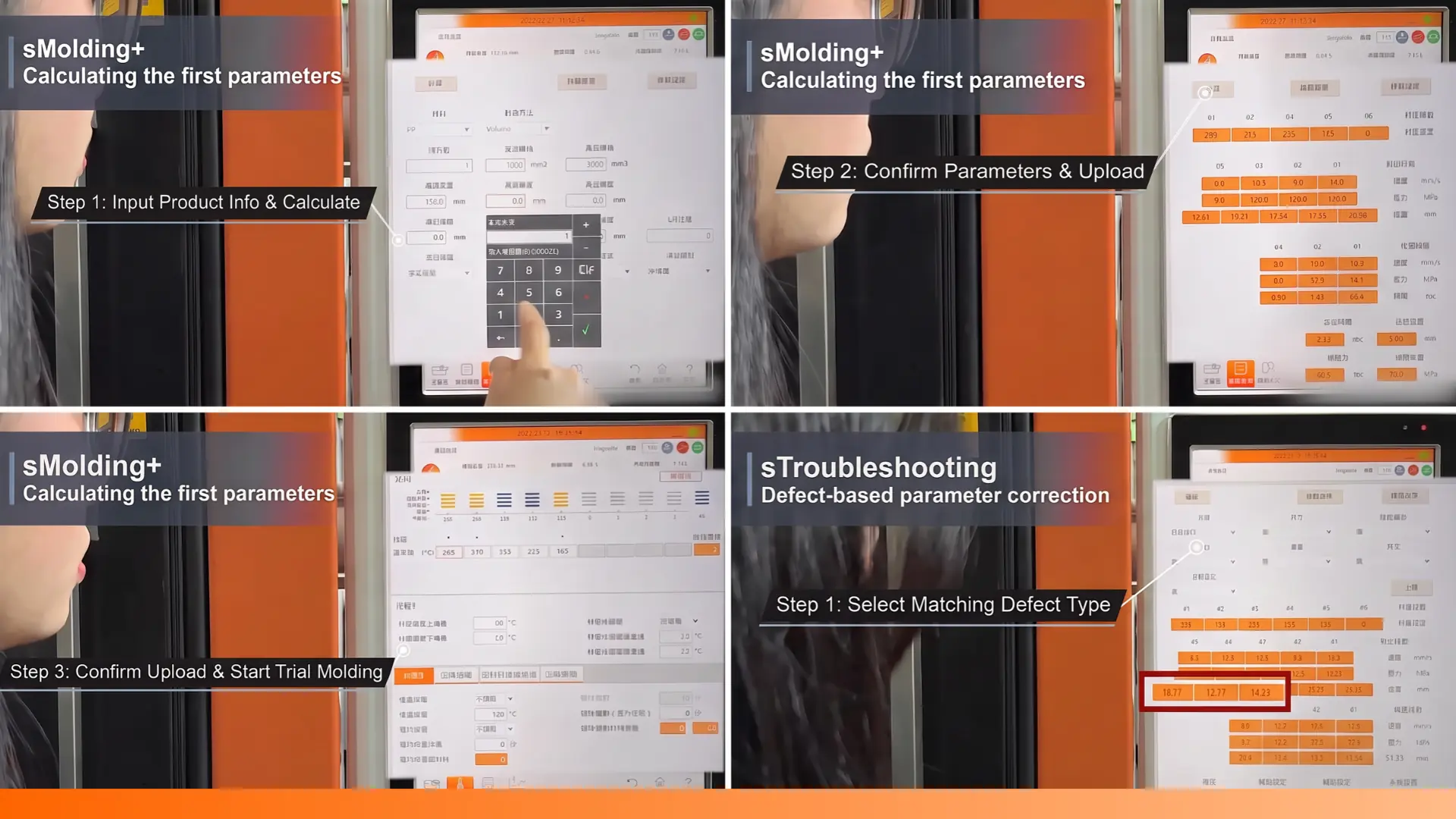
Note: The images above provide a glimpse of the process. Watch the full video demonstration to explore the complete workflow and see how the system works in practice.
[Watch the Full Video →https://youtu.be/baQsT2xLssw?si=rkukrcb7BqNHoUiw ]
Frequently Asked Questions
1. What is quality consistency in injection molding?
Quality consistency in injection molding refers to the ability to produce parts with consistent weight, dimensions and surface appearance across repeated production cycles. It also involves maintaining product specifications and process repeatability throughout a production run.
2. What causes inconsistent quality in injection molded parts?
Inconsistent quality can result from variations in machine conditions, process parameters, mold conditions, material properties and cooling. Factors such as unstable injection pressure, inadequate material drying, mold wear and uneven cooling may affect part dimensions, weight and appearance.
3. How do injection molding machine parameters affect product quality?
Injection speed, injection pressure, holding pressure, holding time and cooling time influence material filling, packing and solidification. Changes in these parameters can affect part weight, dimensions and surface appearance. Maintaining suitable and repeatable settings helps reduce process variations.
4. How can AI-assisted process optimization support consistent mass production?
AI-assisted process optimization can analyse real-time machine data and identify deviations between actual and theoretical process parameters. Systems such as Chen Hsong’s iChen™ AI Molder can automatically make micro-adjustments to selected parameters, including injection and holding pressure, to support more stable process conditions during mass production.
5. How can manufacturers monitor quality consistency during mass production?
Manufacturers can monitor quality by checking part weight, dimensions and surface appearance at regular intervals. Comparing inspection results and machine data across production cycles helps identify deviations and determine whether process adjustments are needed.

