
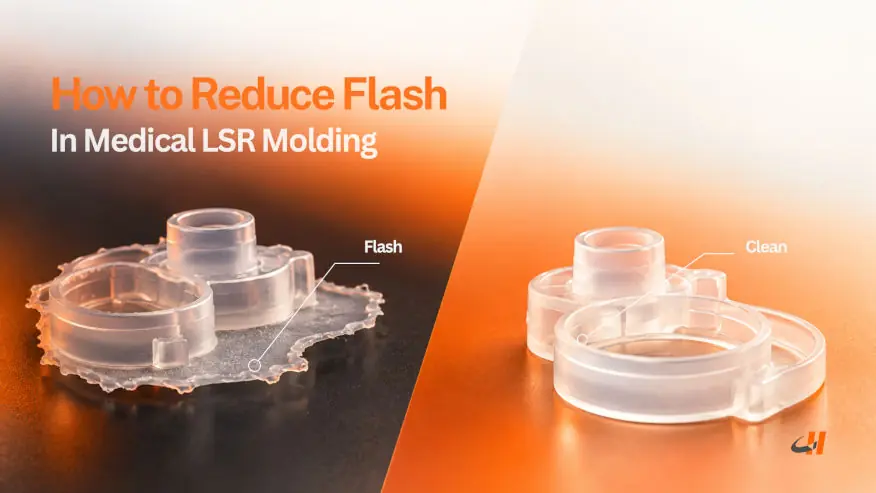
Liquid silicone rubber (LSR) is used in medical components that require flexibility, precision and consistent performance. Its low viscosity allows the material to flow into complex mold cavities, but it also makes flash control an important part of the molding process.
Flash occurs when excess LSR escapes from the intended cavity, often around mold parting lines, inserts or other sealing surfaces. For medical components, controlling flash supports consistent dimensions, clean part edges and repeatable production.
A major challenge in LSR injection molding is controlling material flow while maintaining precise mold sealing and stable processing conditions.
Why Does Flash Occur in Medical LSR Molding?
LSR has a very low viscosity, allowing it to flow easily into complex and detailed cavities. At the same time, extremely small gaps can become potential paths for material leakage.
According to Chen Hsong’s LSR technical solution, LSR can penetrate gaps as small as 0.005 mm. This makes mold precision and sealing important considerations when designing and producing medical LSR components.
Mold conditions are only one part of the process. Injection speed, pressure and shot consistency influence how the material fills the cavity. Clamping conditions affect how consistently the mold remains closed during injection, while temperature conditions influence material flow and curing.
Effective flash control requires attention to the complete molding process, from mold design and sealing to injection, material delivery and temperature control.
How Can Mold Precision Help Reduce LSR Flash?
Mold precision plays an important role in reducing LSR molding flash.
Because LSR can flow into extremely small gaps, the mold requires accurate parting-line surfaces, proper alignment and reliable sealing throughout repeated production cycles. Chen Hsong’s technical solution specifies high-grade, heat-treated stainless steels such as H13 or S136, with a surface hardness of 50–54 HRC, to support mold durability and reduce the risk of micro-gaps that can contribute to flash.
For medical LSR molds, the technical comparison also specifies a venting gap of less than 0.005 mm, together with active vacuum assistance for air removal.
These requirements reflect the precision involved in medical LSR molding. A mold needs to maintain stable sealing and dimensional conditions throughout production, rather than only achieving accurate closure during initial setup.
Maintaining mold precision, alignment and sealing surfaces can help control where LSR flows and reduce the risk of material escaping from the intended cavity.
How Do Injection Control, Material Flow and Temperature Affect Flash?
Mold precision needs to work together with controlled injection and material delivery.
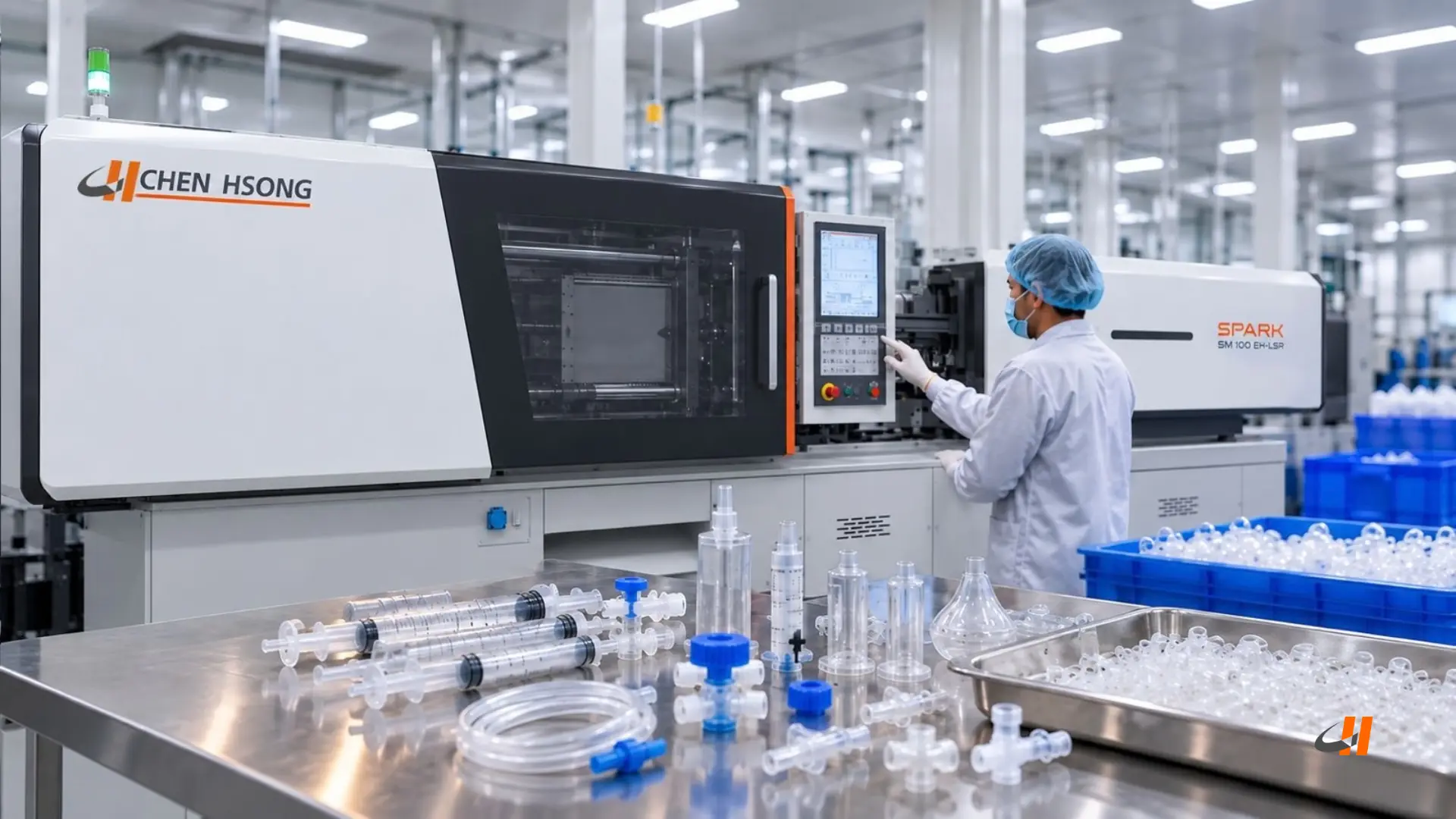
Injection speed, pressure and position influence how LSR fills the cavity. Chen Hsong’s LSR solution uses a plunger-type electric injection unit with 0.01 mm-level injection precision. The plunger-type injection system provides precise control of LSR material movement, while servo-driven injection control supports accurate and repeatable shot movement throughout the molding cycle.
This combination helps maintain consistent filling conditions and precise material dosing, supporting more controlled LSR flow during injection.
Material delivery also affects the filling process. LSR uses a two-component A/B material system that is metered and mixed before injection. Chen Hsong’s solution incorporates a cold runner system and valve gate technology to manage material delivery to the cavities.
The cold runner keeps the LSR in a liquid state before it reaches the cavity. After injection, the valve gate closes to control the material at the gate and reduce stringing and gate residue.
Temperature control is another part of the process. Chen Hsong’s technical solution describes LSR injection at approximately 20–30°C and curing in a mold at approximately 170–200°C.
The system uses PID closed-loop temperature control, with temperature consistency across multiple cavities specified at ±1°C. Stable temperature conditions help maintain predictable material flow and curing behaviour throughout the molding cycle.
Together, injection precision, controlled material delivery and temperature stability support more consistent filling and curing conditions for medical LSR molding.
How Can Manufacturers Achieve More Consistent Medical LSR Molding?
Reducing flash requires consistency across the molding process.
A precision mold needs to work with stable injection control, while material delivery and temperature conditions need to remain consistent throughout the molding cycle. Clamping also needs to maintain the mold seal as the material fills the cavity.
The key process factors can be summarised as:
Mold Precision + Injection Control + Material Delivery + Temperature Stability
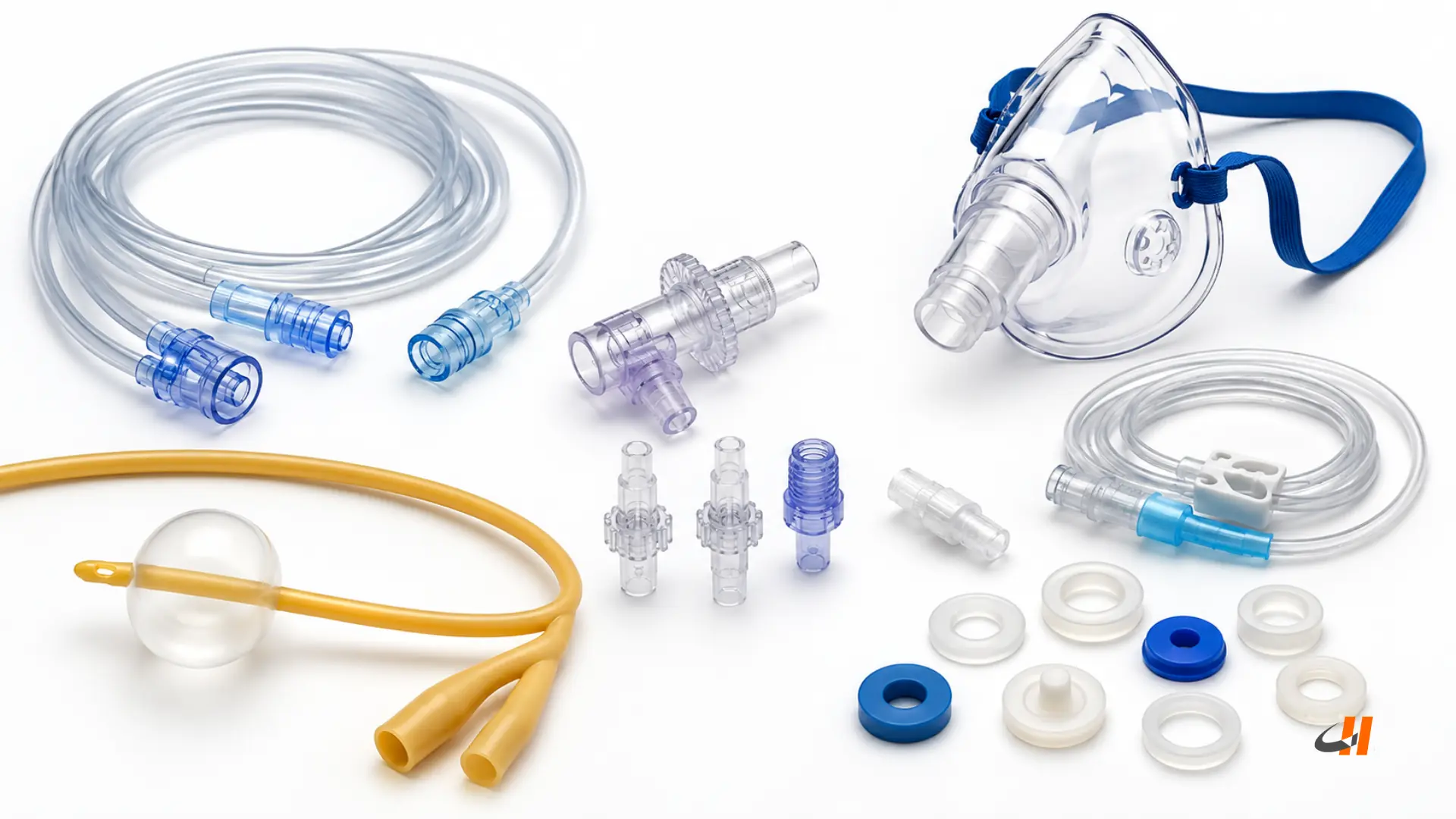
For medical LSR production, these factors need to be controlled as part of one molding process. Chen Hsong’s LSR solution combines electric injection, precision material feeding, cold runner and valve gate technology, and temperature control to address these requirements within the molding system.
The system is designed for high-precision LSR molding, combining precise injection control with controlled material delivery and temperature management.
For medical LSR manufacturers, coordinating these process factors can support consistent part quality and repeatable production. It can also help reduce the need for additional flash-removal operations when the molding process is properly controlled.
The focus is on maintaining stable conditions throughout the molding cycle, so the mold, injection system, material and temperature control work together as one process.
Conclusion
Flash reduction in medical LSR molding starts with controlling the relationship between material behaviour, mold precision and process conditions.
Because LSR can penetrate gaps as small as 0.005 mm, precise mold sealing and alignment are important. Mold materials such as H13 or S136, with 50–54 HRC surface hardness, can support the durability and dimensional stability required for precision molding.
At the machine level, 0.01 mm-level injection precision, controlled material delivery and ±1°C temperature consistency can help maintain stable and repeatable molding conditions.
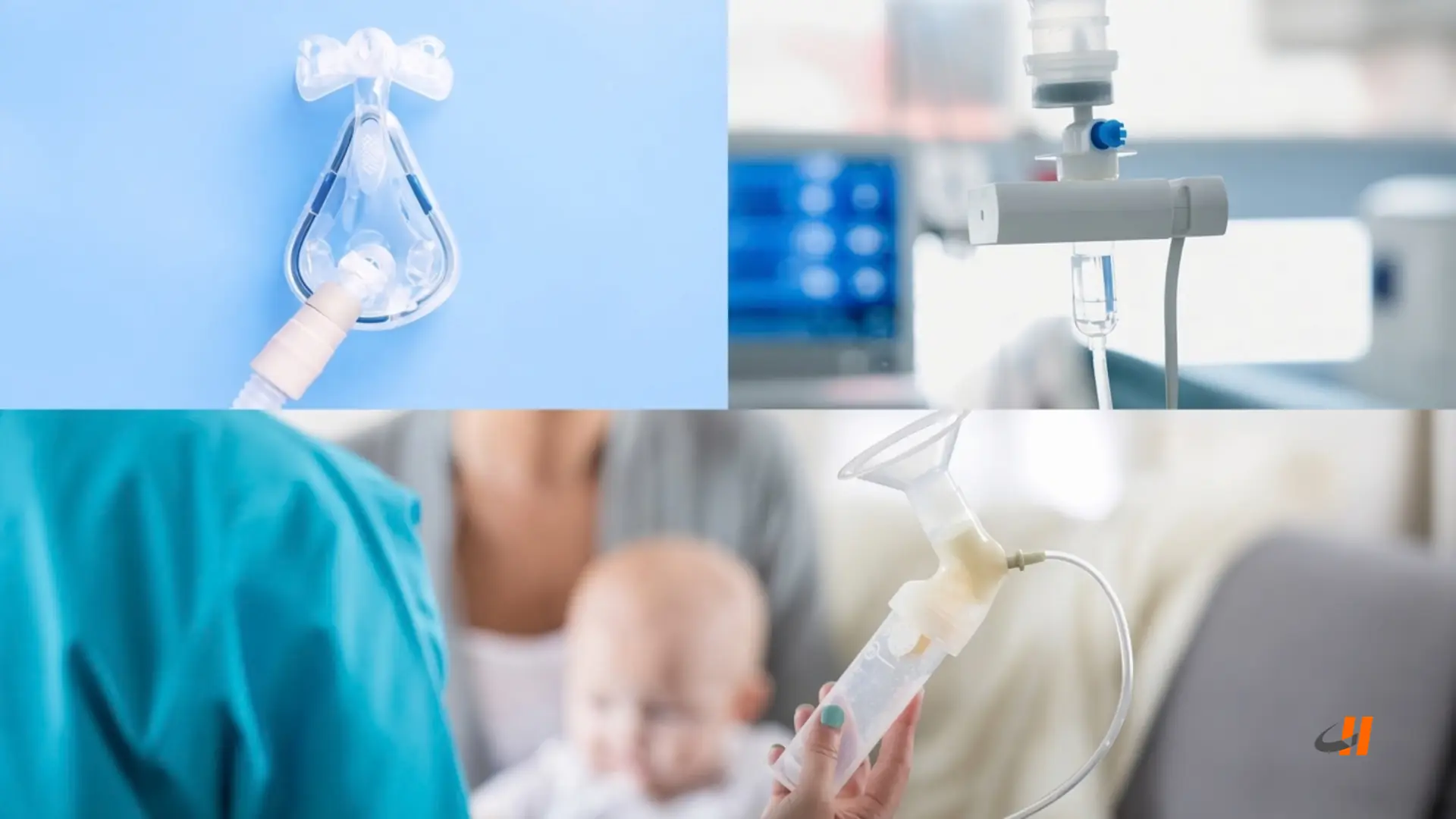
For medical LSR manufacturers, effective flash control comes from managing these factors together. A coordinated molding process can support more consistent parts, repeatable production and controlled flash formation.
Frequently Asked Questions
What causes flash in LSR molding?
Flash can occur when low-viscosity LSR escapes through very small gaps in the mold, particularly around parting lines, inserts and sealing surfaces. Mold precision, injection conditions, clamping, material delivery and temperature stability can all influence flash formation.
How can manufacturers reduce flash in medical LSR molding?
Manufacturers can reduce flash by maintaining precise mold sealing, controlling injection and clamping conditions, managing LSR material delivery and maintaining stable temperature conditions throughout the molding process.
Why is mold precision important for LSR molding?
LSR has a very low viscosity and can penetrate gaps as small as 0.005 mm. Accurate mold alignment, sealing surfaces and parting-line conditions are important for controlling material leakage and reducing flash.
How does injection control affect LSR flash?
Injection speed, pressure and shot position influence how LSR fills the cavity. A plunger-type injection unit supports precise and controlled material movement, while servo-driven injection control helps maintain accurate and repeatable injection. Chen Hsong’s LSR solution provides 0.01 mm-level injection precision, supporting consistent filling conditions during the molding cycle.
How does temperature affect LSR molding?
Temperature affects LSR flow and curing behaviour. Stable temperature conditions help maintain predictable processing conditions. Chen Hsong’s LSR solution uses PID closed-loop control with temperature consistency across multiple cavities specified at ±1°C.

