
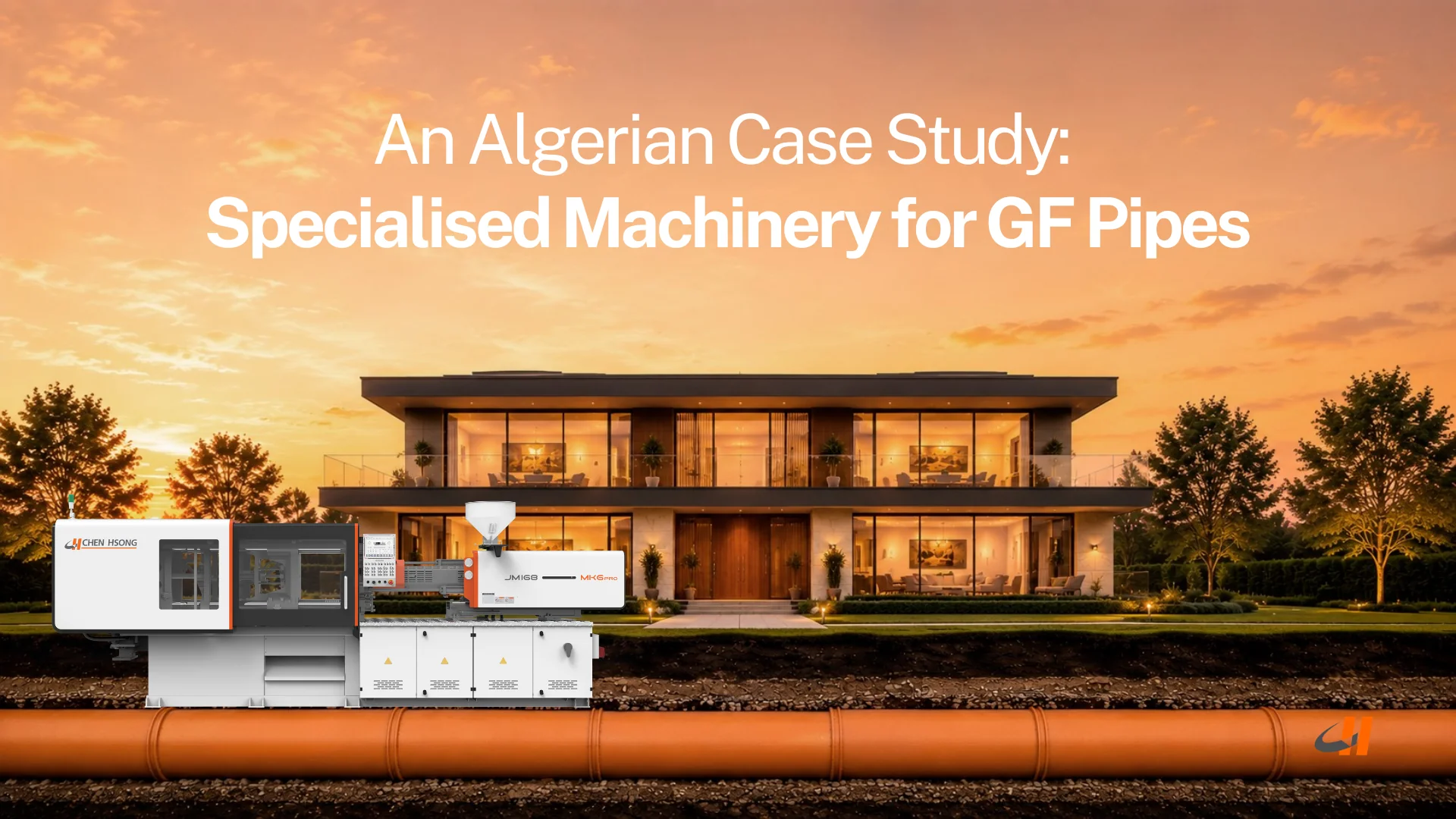
High-pressure infrastructure requires absolute reliability. When a leading Algerian water piping company decided to scale their operations, they faced a complex engineering challenge. Processing abrasive materials and corrosive compounds requires specialised equipment. To dominate pipe fitting injection molding, manufacturers must carefully select machinery capable of handling aggressive resins while maintaining strict dimensional tolerances. A recent fleet acquisition of Chen Hsong JM-MK6 PRO machines demonstrates a highly effective approach to this industrial hurdle.
Mastering Abrasive and Corrosive Materials
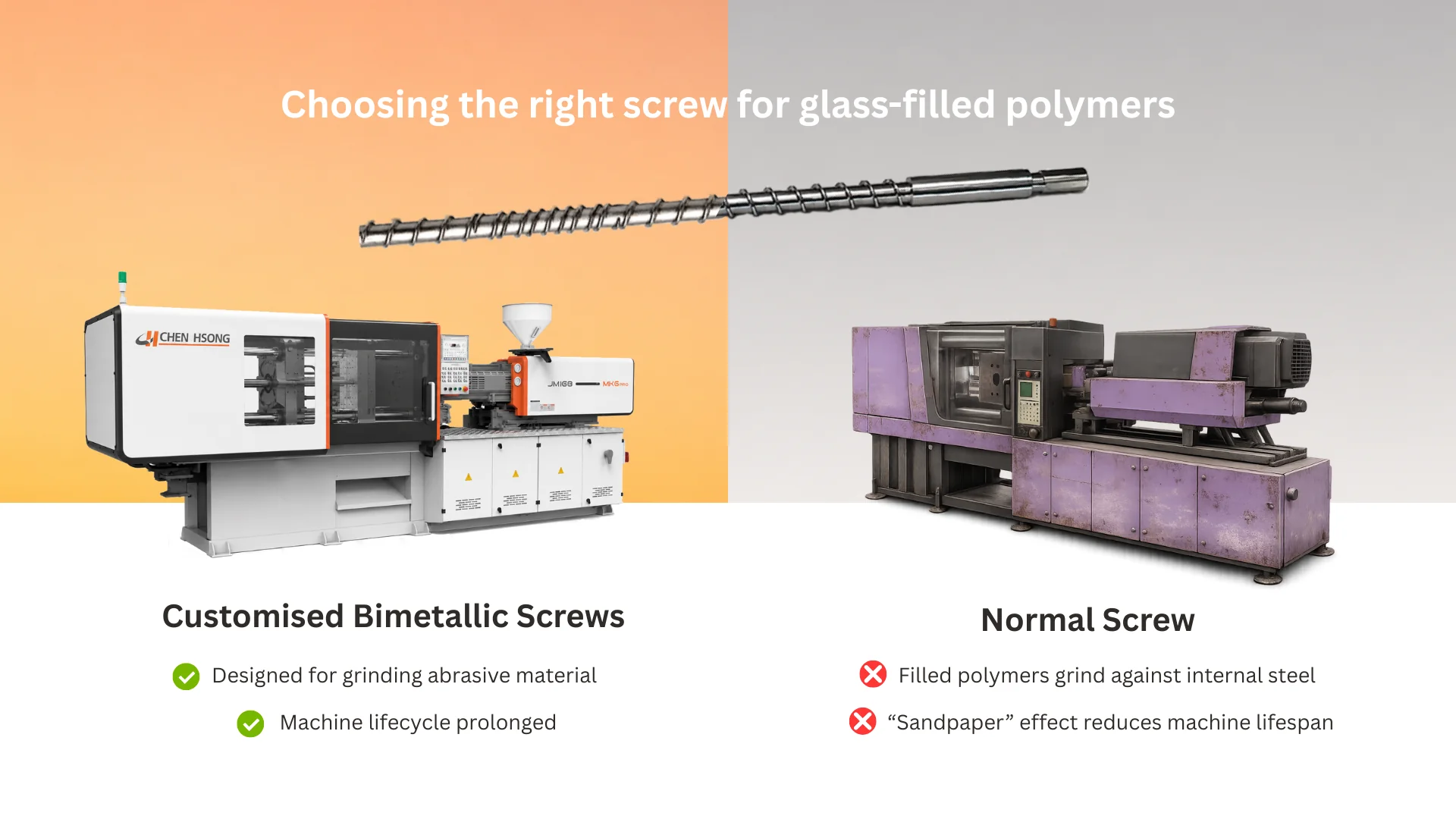
Glass fibre reinforcement introduces rapid wear on standard plasticising components. Running GF filled polymers acts like sandpaper against internal steel, while processing SPVC releases corrosive gases. Overcoming this reality requires serious metallurgical expertise.
By outfitting their JM-MK6 PRO machines with customised bimetallic screws alongside rigid PVC specialised injection units, the Algerian manufacturer secured long-term durability. These hardened components resist mechanical abrasion effectively. They also repel chemical degradation to drastically extend the machine lifecycle. Investing in specialised plasticising technology eliminates the constant threat of equipment degradation. Facilities operating in high-demand sectors secure higher yields by addressing material friction at the microscopic level.
Securing Dimensional Stability Under Pressure
Underground water networks cannot tolerate leaks. Pipe fittings demand exact dimensional accuracy to ensure tight seals across decades of continuous use. Maintaining this level of consistency involves advanced computational power.
The MK6 PRO utilises a next-generation intelligent computer controller to execute closed-loop calculations at lightning speeds. By achieving precision pressure control within ±0.5%, the system stabilises material flow directly into the mold cavity. This highly accurate pressure regulation prevents shrinkage variations. Manufacturers can confidently produce thick-walled components that meet strict quality standards. Machine precision translates directly into field reliability for critical infrastructure.
Synchronising Production Through Smart Integration
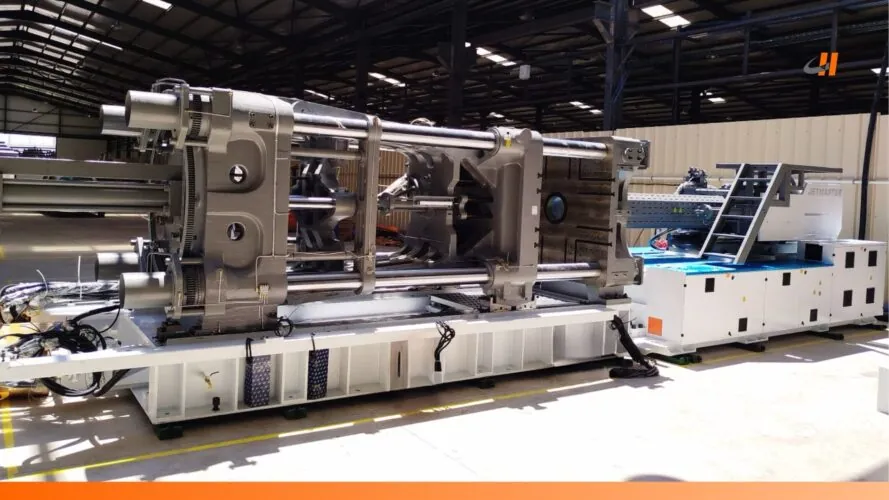
Scaling a factory floor with varying machine tonnages presents a complex logistical puzzle. The Algerian facility installed a mixed fleet ranging from the JM128-MK6 PRO up to a large-scale 800-ton unit. Achieving uniform product quality across such diverse equipment requires tight digital synchronisation.
Integrating intelligent peripheral equipment solves this variability. Through the iChen Smart Factory ecosystem, auxiliary devices like gravimetric dosers interface directly with the machine controller. Material formulations remain perfectly identical whether running on a 168-ton or 568-ton press. This seamless plant-wide interlocking ensures the entire production line operates like finely meshed gears. Connecting the hardware creates a unified manufacturing environment optimised for high-volume output.
FAQ
What makes the JM-MK6 PRO series suitable for abrasive plastics?
The machines can be equipped with customised bimetallic screws and specialised barrels. These hardened components resist the high wear caused by glass fibre filled materials.
How does closed-loop pressure control improve pipe fittings?
Closed-loop control maintains injection pressure within a strict ±0.5% margin. This accuracy prevents part shrinkage and guarantees the dimensional stability required for leak-proof water fittings.
Can peripheral equipment be integrated into the main machine controller?
Yes. Using the iChen Smart Factory platform allows auxiliary units like gravimetric dosers to interface directly with the main system. This interlocking capability provides precise formulation control across multiple machine tonnages.

